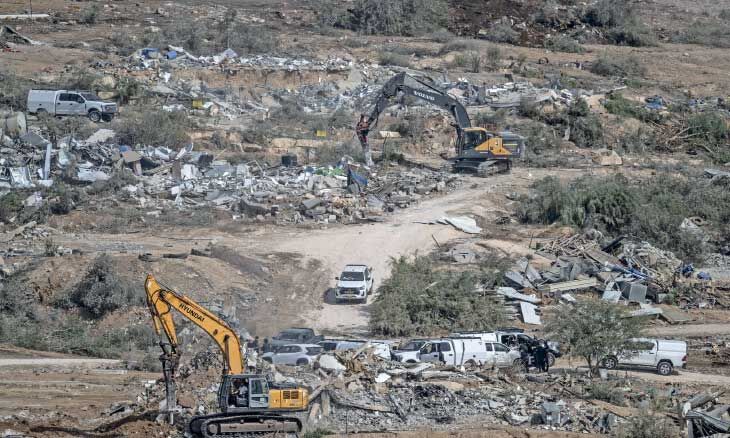
Palestine Media Agency – Pmedia – Member of the Knesset Yosef Al-Attawna stated that any Arab support for forming a new government must be preceded by a clear agreement to stop systematic demolitions and displacement policies in the Negev.
Al-Attawna revealed that occupation authorities disclosed plans during court sessions to relocate residents of 15 Palestinian villages in the area, necessitating a firm stance from Arab political forces before granting confidence to any potential coalition government.
He noted that the recent demolition warnings targeting Wadi al-Na'am village and other areas reflect a consistent occupation policy rather than a reaction to election results. Al-Attawna proposed freezing all demolition and evacuation orders for a full year to allow residents to discuss planning solutions with concerned entities while remaining in their homes instead of negotiating under the threat of bulldozers.
Meanwhile, sources indicated that the camp tasked with forming the government is considering narrow coalition options possibly relying on Arab list votes to secure confidence, aiming to remove Benjamin Netanyahu from the political scene amid sharp disagreements about commitments to Arab community demands and future cooperation with their parliamentary representatives.
Field reports documented approximately 500 demolition warnings issued recently in Wadi al-Na'am alone. Popular committees demanded an independent legal investigation into the timing of this widespread campaign, warning against the use of state powers as punitive tools against Palestinian residents in the Negev due to their political positions.
Sources revealed that the Israel Land Authority employed artificial intelligence and aerial imagery to monitor so-called "violations," issuing over 700 evacuation orders within two days. These included removal of fortified mobile rooms built to protect Bedouin inhabitants, endangering their lives in the event of military escalation.
Al-Attawna emphasized the need to change planning policies toward unrecognized villages, noting that defining contiguous boundaries for Arab regional councils would resolve the housing issue for 90% of residents. Full recognition of these villages with clear structural maps is essential to guarantee families the legal right to obtain building permits protecting them from continuous demolition threats.
Professionally, dozens of Arab doctors called for including community representatives in decision-making processes, highlighting their vital role in the health system. Concurrently, Arab lawmakers were elected to chair parliamentary committees focused on combating violence and social equality, seeking civil and developmental rights beyond traditional political bargaining.
Al-Attawna concluded by stressing that securing budgets alone is insufficient to protect Palestinian presence in the Negev without legal and planning recognition. The current challenge lies in the Arab lists' ability to impose their conditions amid the political deadlock prevailing in occupation decision-making circles.
From Palestine to the world
Al-Attawna Links Support for Upcoming Government to Halt of Demolitions and Displacement in Negev