
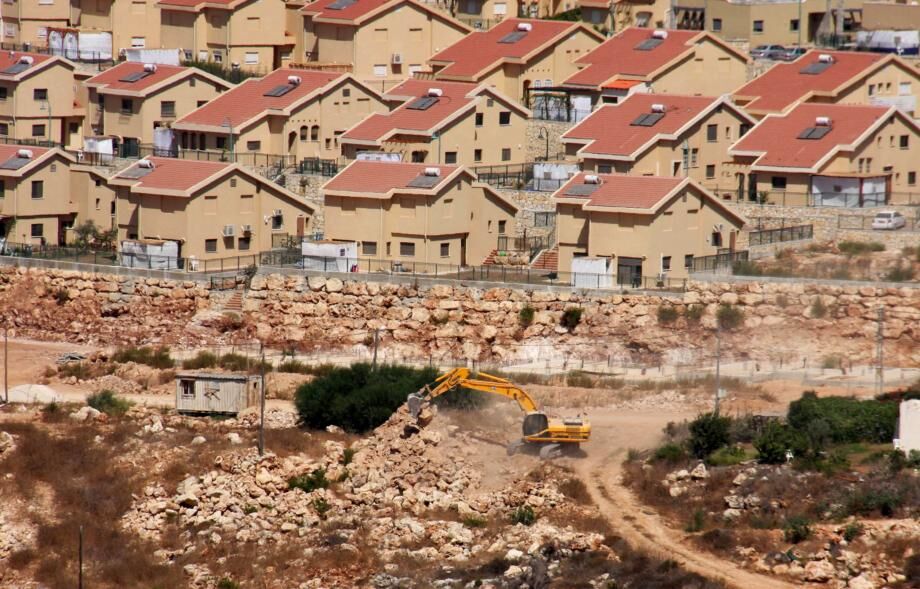
The Wall and Settlement Resistance Authority has reported the identification of 11 new Israeli settlement plans targeting extensive Palestinian lands in the occupied West Bank. These plans aim to add 895 new housing units and expand industrial and commercial areas to strengthen the economic infrastructure of the settlements.
The projects are distributed across Qalqilya, Salfit, Nablus, Ramallah and Al-Bireh, Hebron governorates, as well as the settlement blocs in the Gush Etzion area. The plans include increasing residential density and converting agricultural lands into urban and industrial zones.
In Qalqilya, one plan involves expanding the residential neighborhood of Kedumim settlement built on Kafr Qaddum village lands, adding 288 units over more than 158 dunams. Other plans include adjustments in Karnei Shomron settlement to increase occupancy in industrial areas and limited residential expansion in Oranit.
Salfit governorate saw the approval of two plans in Ariel settlement, including 98 new housing units north of the settlement, as well as converting wide agricultural and open areas into residential neighborhoods, roads, and public facilities. Bdoeil settlement underwent planning adjustments to optimize urban space.
In Ramallah and Al-Bireh, the Israeli authorities approved a plan in Talmon settlement to build 200 additional units over 65 dunams, with comprehensive land use reorganization and infrastructure upgrades.
In Nablus, agricultural lands were converted to residential and road areas in Elon Moreh settlement with 83 new housing units added.
Hebron witnessed a major plan in Beit Hagai settlement for 225 housing units on about 190 dunams, alongside a large industrial and commercial project in Kiryat Arba covering over 165 dunams of agricultural land. Additionally, in Gush Etzion, authorities allowed commercial and service facilities expansion within public institution plots and open spaces.
The Resistance Authority warned that the cumulative impact of these plans creates an integrated settlement system that suffocates Palestinian communities, reduces their natural growth potential, and threatens geographic continuity between their towns and villages.