Palestine Media Agency – Pmedia – The Winter Emergency Committee in Gaza has called on the United Nations and international organizations to urgently disclose the status of tens of thousands of tents and winter shelter supplies that have not reached displaced persons, despite Israeli claims of their entry.
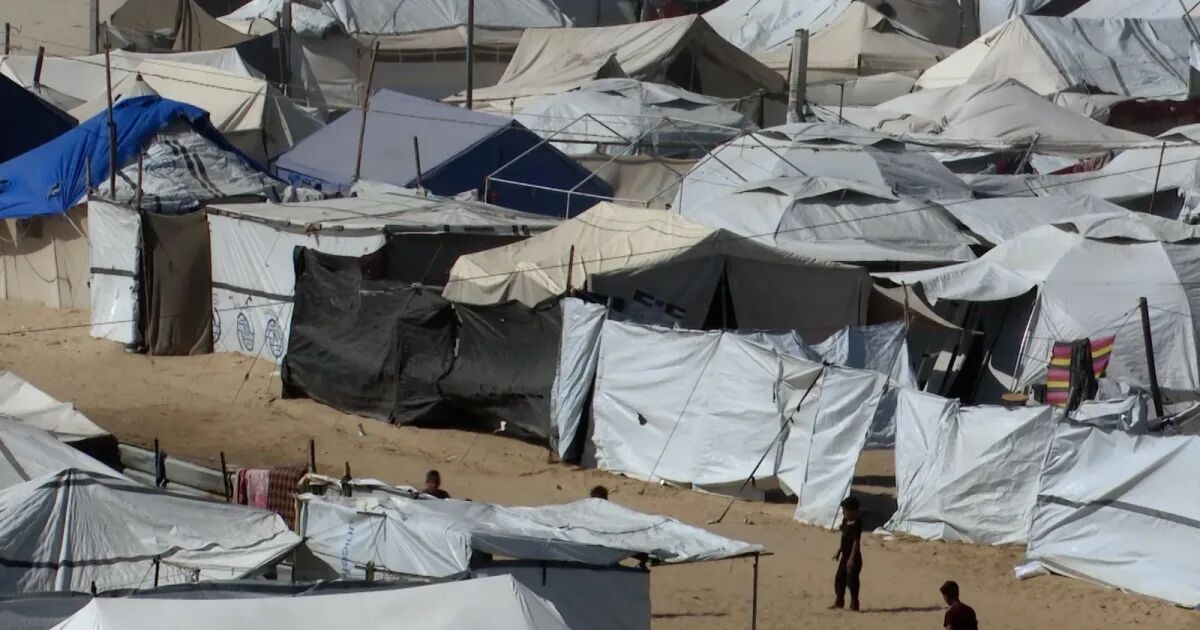
In a press statement, the committee refuted Israeli claims of delivering approximately 100,000 tents and over 9,000 trucks of winter supplies, describing these figures as sharply contradicting the harsh conditions observed on the ground where displaced families continue to live in torn tents lacking basic protection.
The committee noted that the vast majority of displaced families have not received new tents or sufficient winter supplies to protect them against the cold, raising serious questions about the true whereabouts of the declared quantities and the mechanisms of their storage and distribution.
It accused the Israeli occupation authorities of evading their legal responsibilities by blaming international organizations for the purported 65,000 tents still held up, criticizing the silence or limited general reporting by international bodies which leaves their professional and ethical role in question.
The committee urged the United Nations to issue transparent statements addressing Israeli claims and clarifying the facts regarding the number and actual fate of the tents. It also condemned reliance on so-called "approval catalogs" and coordination procedures employed by the occupation to justify the ongoing severe humanitarian crisis and hinder aid delivery.
Stressing that resolving the humanitarian disaster in Gaza requires more than media statements or symbolic aid deliveries, the committee called for radical solutions including the introduction of mobile homes (caravans), essential construction materials, and heating means to protect displaced persons from life-threatening cold.
The statement concluded by holding the Israeli occupation fully legally and morally responsible for the ongoing crisis as the occupying power controlling the crossings, while also holding international institutions accountable for any failure in monitoring aid entry, distribution, or exposing systematic obstacles imposed by the occupation to the global public.