
Palestine Media Agency – Pmedia – A recent maritime attack off the coast of Libya brought renewed attention to the effectiveness of "Kamikaze" weapons. These weapons differ from traditional drones by being designed to self-destruct upon striking their specified target, making them lethal tools in modern warfare.
Ukrainian President Volodymyr Zelensky announced that Ukraine claimed responsibility for the naval attacks in the port of Benghazi in eastern Libya. Zelensky stated the attack directly targeted military interests in Libyan waters, asserting the mission successfully achieved its objectives.
Field sources reported that the attack, executed using suicide drone boats, resulted in the sinking of the Russian cruiser "Merkury." Approximately ten people aboard the targeted naval vessel were injured during the attack.
The strike extended beyond the Russian cruiser, also affecting a Maltese cargo ship off the Libyan coast simultaneously. Moscow announced it is considering an appropriate response to this military escalation against its naval forces.
Historically, the term "Kamikaze" refers to Japanese suicide pilots in World War II. In the modern context, it describes unmanned aerial and naval drones carrying explosives that collide with their targets to destroy them.
These suicide systems fundamentally differ from reconnaissance or combat drones that return safely to base; they serve as missiles themselves, detonating upon direct impact with military installations or warships.
Included in this category are "loitering munitions," drones capable of remaining airborne for over 40 minutes, awaiting a suitable target before executing a precise, surprise suicide attack.
These advanced weapons utilize sophisticated positioning systems and high-definition cameras for remote monitoring and control, allowing operators to track attack paths and decide to execute or abort strikes based on battlefield data.
The Iranian "Shahed 136" drone is among the most prominent examples currently used in suicide warfare and has been deployed by Russian forces under the name "Geran-2" for strategic target strikes.
The "Shahed 136" features a sleek design with wingspan close to 2.5 meters and carries a powerful explosive payload that detonates upon target impact, despite being detectable and interceptable by conventional air defense systems.
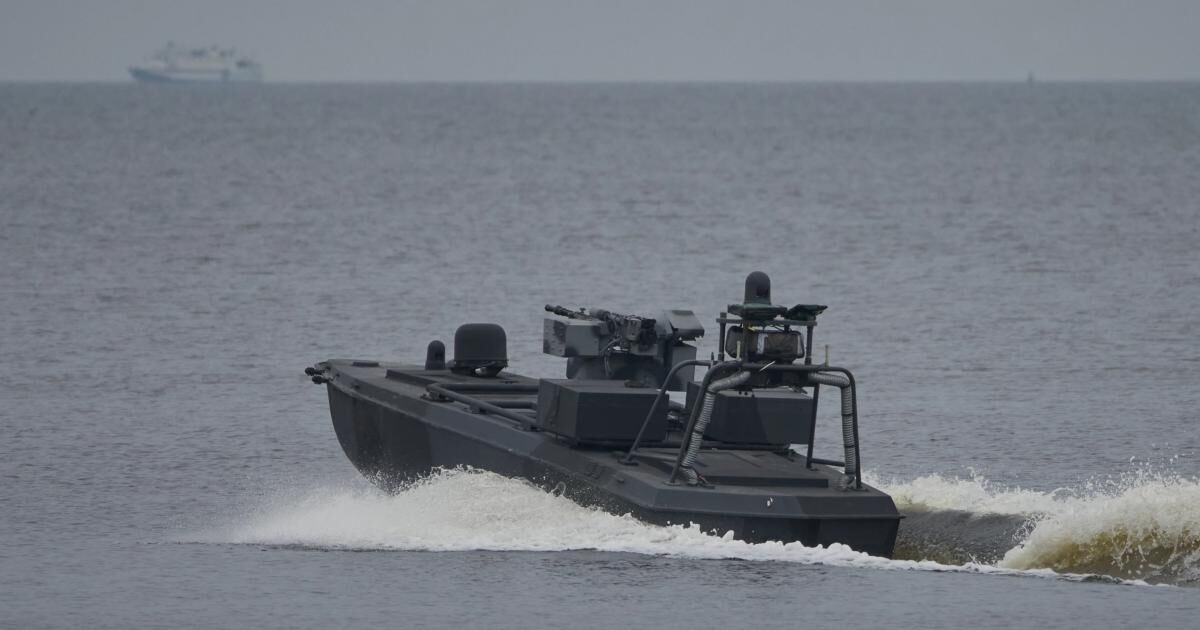
Kamikaze technology has expanded from aerial use to the maritime domain through development of fast, unmanned suicide boats, successfully employed by Ukraine in striking the Russian Black Sea fleet in complex operations.
These drone boats aim to collide directly with ship hulls or detonate nearby to inflict maximum structural damage and use water jet propulsion engines for high speed and maneuverability in open waters.
Military experts view these weapons as pivotal in modern conflicts to minimize human casualties among attacking forces, enabling destruction of large, expensive military assets with relatively low-cost tools compared to guided missiles.
The Benghazi attack marks a new phase in operational theaters, shifting confrontations among international parties to geographically distant zones from the direct conflict, confirming that suicide drone boats now pose a real threat to military and commercial navigation in the Mediterranean basin.