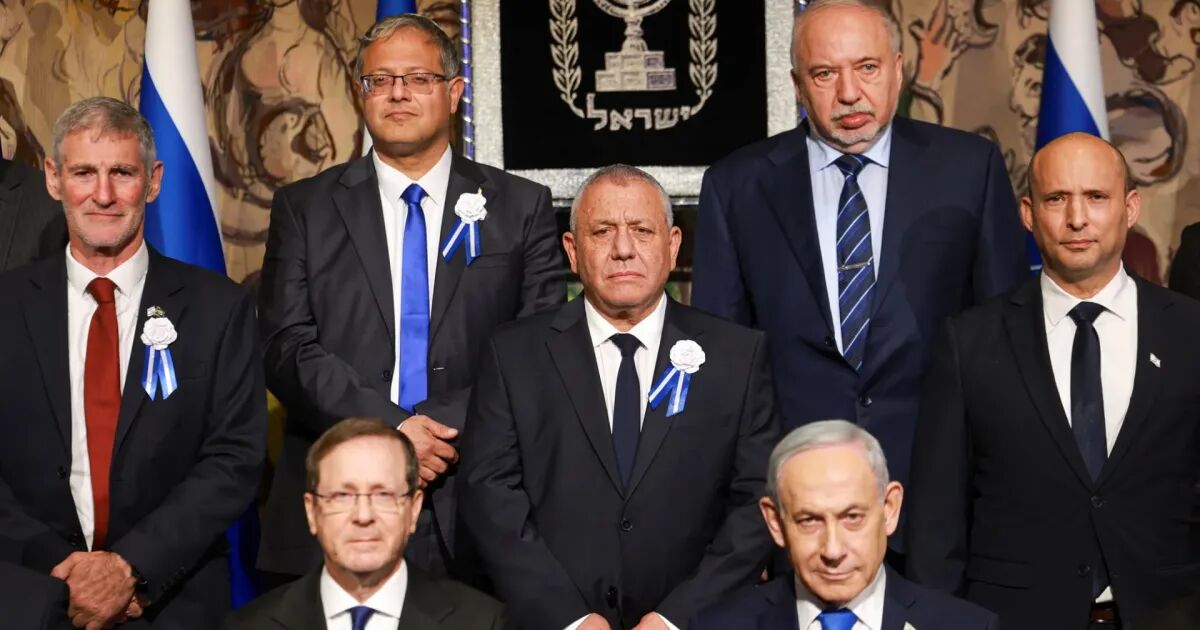
Palestine Media Agency – Pmedia – The designated Prime Minister, Gadi Eisenkot, warned of a sharp deterioration in the international standing of the occupation entity, stressing that the current situation is approaching a point of no return. He made these remarks following a series of meetings with his partners in the Change and Reform parties to discuss forming a new government.
Eisenkot stated that he conducted intensive discussions, both collective and individual, addressing recent legislative developments in the Knesset and ways to advance coalition formation. He acknowledged that criticism of his political approach is a legitimate right amid the current political challenges. The statement highlighted recent legislative achievements, including appointing heads of key Knesset committees, electing Matan Kahana as the new Knesset speaker, and agreeing to nominate Judge Yosef Elron as state comptroller.
He described the current phase as highly dangerous, accusing the outgoing Prime Minister of unprecedented methods in managing the political scene. Eisenkot emphasized this was a realistic assessment, not fearmongering, calling for caution and national responsibility. He noted that opposition leaders were aware of Netanyahu’s conduct to some extent previously, but the full scope has only now become clear, posing a direct threat to the entity’s image and global standing.
Eisenkot warned of repercussions from campaigns aiming to delegitimize large population sectors and label them as supporters of terrorism, which could pave the way for actual violence. He stressed that ongoing incitement threatens internal cohesion and increases international isolation.
He criticized mixing personal political interests with operational and security timelines, describing this approach as reckless and unacceptable. Eisenkot stated that continuing to govern without the confidence of 74 Knesset members is undemocratic and improper.
Regarding government formation, Eisenkot mentioned three proposed paths and noted his serious and open approach toward a consensual formula. Talks with Haredi parties aimed at solutions to strengthen the occupation forces while considering Torah students’ status were also highlighted.
Eisenkot pointed out a significant gap between political rhetoric and Likud’s actual practices despite sincere efforts by his team, calling for genuine unity based on partnership and shared values rather than transient political agreements.
He declared his intention to give negotiations with Likud an additional chance to convince its members to bear responsibilities during this sensitive phase, seeking a breakthrough to form a broad-based coalition.
Finally, Eisenkot assured he does not intend to delay or waste time on futile consultations and will present a strong and solid new government lineup at the right time to gain Knesset confidence. He warned that if efforts to form a broad government fail, he will turn to the emergency government option and work to expand it before or after the swearing-in to ensure political stability.