
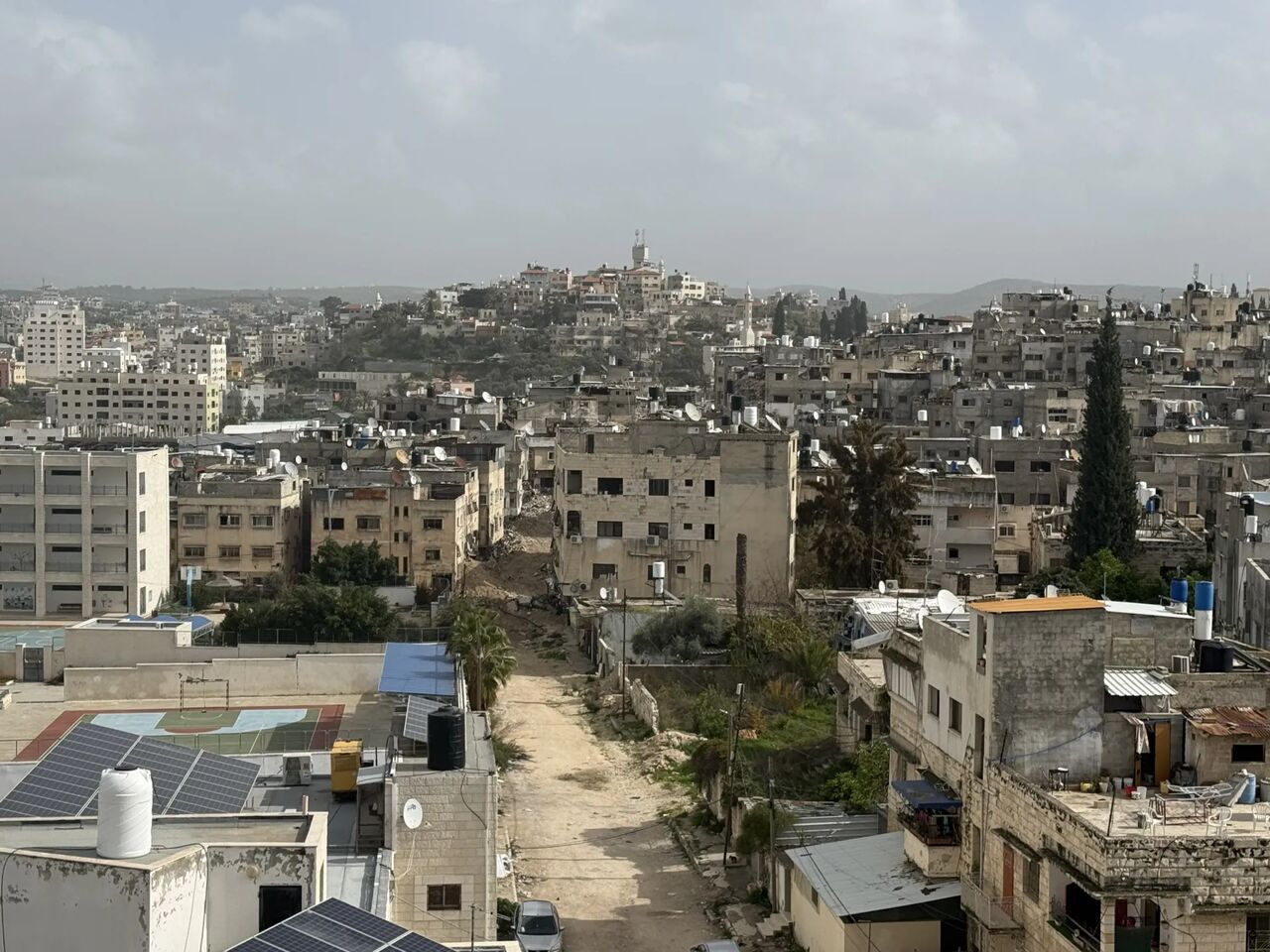
Suhail Al-Salman, coordinator of the popular committees within the Popular Campaign to Resist the Wall and Settlements, revealed a new escalation by the Israeli occupation targeting the city of Tulkarm in the northern West Bank. Since late October, the Israeli Civil Administration’s higher planning committee has proposed plans to expand the "Afni Hefets" settlement.
Currently, Afni Hefets occupies approximately 1,367 dunams of confiscated Palestinian land in the villages of Kafr al-Labad, Shufa, and Al-Hafasi. The new plan aims to enlarge this area to reinforce settlement control over the southeastern region of Tulkarm.
The project connects the "Einav" settlement to the east with Afni Hefets to the southeast, extending to a recently developed industrial settlement zone spanning 800 dunams near the Green Line. Al-Salman described this expansion as forming a "circular settlement crescent" intended to isolate the southern villages of Tulkarm, known as the Kafriyat villages, from the city center.
This geographic isolation disrupts Palestinian villages' connectivity, reducing them to isolated enclaves, while tightening restrictions on residents’ daily movement and livelihoods. The expansion impacts the agricultural sector significantly, depriving farmers access to their lands and olive harvests as confiscated areas transform into settlement hubs.
Al-Salman warned that increasing settlement density correlates with a rise in settler violence against Palestinians, often backed by occupation forces aiming to force residents off their lands and facilitate land seizure.
Human rights and anti-settlement sources report a recent acceleration in settlement construction, with tenders for over 5,200 housing units in the West Bank during this year alone, alongside more than 2,568 new units planned for occupied Jerusalem. These developments reflect the occupation’s strategy to alter the demographic and geographic reality of Palestinian areas, including isolating Jerusalem from surrounding Palestinian communities.
An estimated 770,000 settlers live in the West Bank, including 250,000 in Jerusalem, often engaging in daily attacks intended to forcibly displace indigenous Palestinians. During the current olive harvest, the Wall and Settlement Resistance Authority documented over 674 attacks by settlers and occupation forces, including tree vandalism and physical assaults on farmers.
Tulkarm exemplifies the dual siege imposed by the separation wall from the west and expanding settlements from the east and south, effectively turning Palestinian cities into open prisons lacking space for growth.
In conclusion, Al-Salman emphasized that the Palestinian villages of Tulkarm face an existential threat due to the combined roles of the occupation army and settlers, as settlement policies continue unabated in defiance of international law. Popular resilience remains the primary obstacle against the completion of this suffocating settlement crescent.