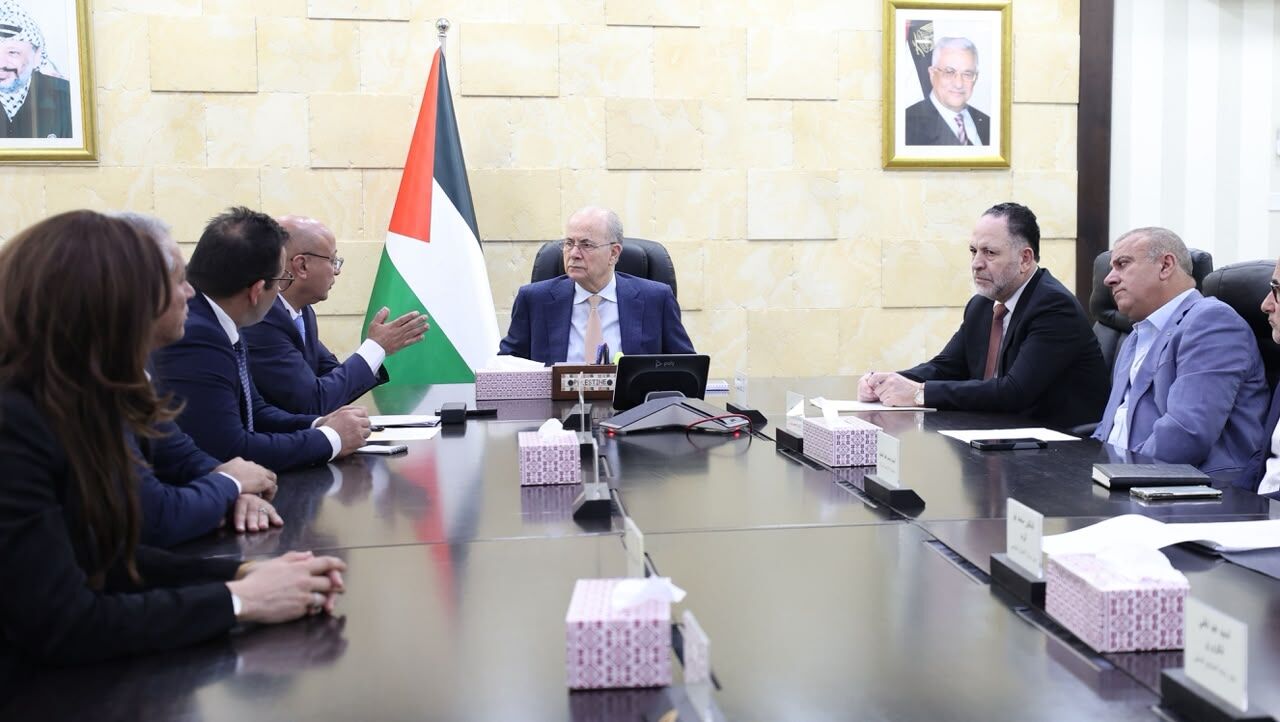
Palestine Media Agency – Pmedia – Palestinian Prime Minister Muhammad Mustafa met in Ramallah with a delegation from the Refugee Affairs Department of the Palestine Liberation Organization to discuss the outcomes of a strategic intervention project aimed at improving basic services in 26 refugee camps across the West Bank and Lebanon.
The project, funded by the European Union and in cooperation with UNRWA and the Water Authority, focuses on improving water and sanitation services, waste management, and rainwater drainage. The comprehensive field study covered 20 camps in the West Bank and 6 in Lebanon to assess infrastructure conditions and identify service gaps, laying groundwork for priority projects ensuring sustainability of services.
The assessment pinpointed the most in-need camps in the West Bank including Balata, Al-Arroub, Al-Fawwar, Dheisheh, and Jalazone, alongside urgent interventions in Nahr al-Bared, Beddawi, Ain al-Hilweh, and Shatila camps in Lebanon. Key recommendations include immediate rehabilitation of deteriorated water networks, replacement of old pipes to reduce leakage, addressing sewage flooding, and strengthening coordination among UNRWA, municipal bodies, and popular committees for efficient waste management and rainwater drainage to protect camp residents from environmental risks.
Prime Minister Mustafa reaffirmed the legal and political mandate of UNRWA in all camps per international resolutions, emphasizing the agency's continued role in education, health, and relief services. He announced the government’s plan to allocate part of road transport fees to support service projects within the camps. Refugee Affairs Director Ahmed Abu Holi stressed the department’s commitment to protecting refugee rights and supporting UNRWA’s mandate alongside continuous efforts to improve living conditions.
He highlighted the initiation of solar energy installations at water wells in Lebanese camps to ensure water access amid ongoing crises. The first solar energy project has been inaugurated in Mar Elias camp, with similar projects planned for Beddawi and Jalil camps in partnership with the Palestine Forum. These measures form part of a comprehensive vision to modernize the dilapidated infrastructure in refugee camps and provide sustainable energy alternatives to ease operational burdens and maintain vital services for refugees.