
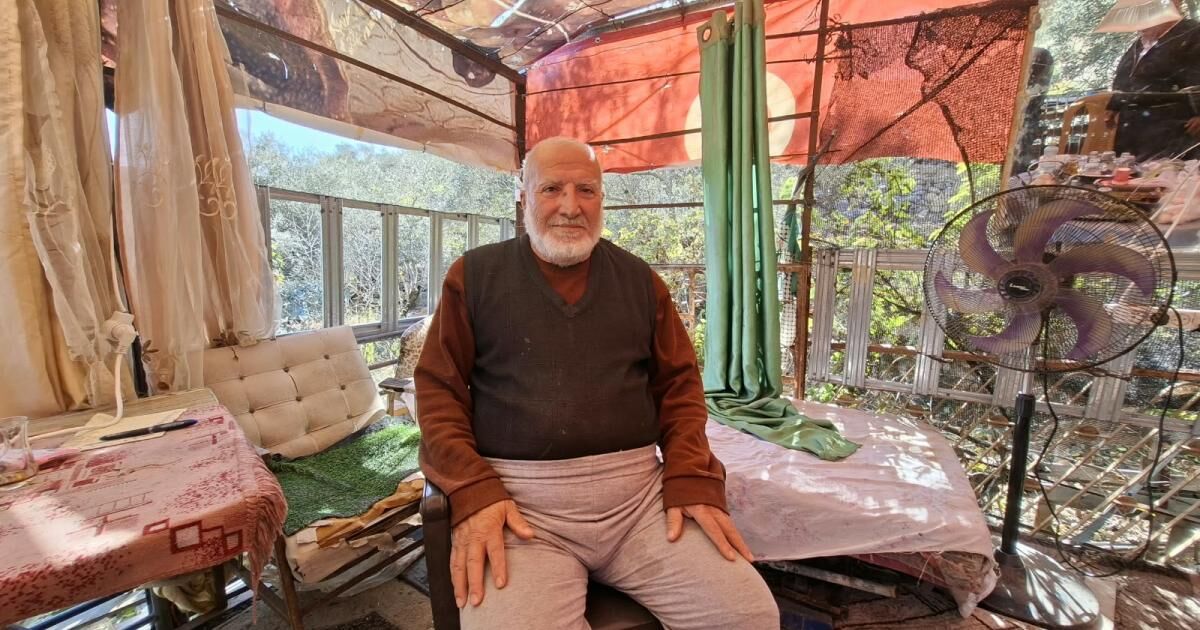
Palestine Media Agency – Pmedia – Haj Kamel Ishtieh, 76 years old, embodies the steadfast Palestinian resilience in Wadi Al-Shaer, located in the city of Salfit, northern West Bank. Despite his advanced age and having undergone open-heart surgery, his first destination after hospital discharge was his land, where he insists on checking on his olive trees before returning home.
Wadi Al-Shaer is one of Salfit’s most prominent agricultural areas, spanning over 2,000 dunams planted with olives, almond trees, grapes, and figs. This land serves as a vital livelihood source for dozens of Palestinian families and is historically recognized for producing some of the finest olive oil, making it an ongoing target for settler expansion.
Settlers have established an outpost near Haj Kamel’s land and have been systematically harassing farmers through theft attempts of agricultural equipment and intimidation, especially during harvest seasons, aiming to force Palestinian owners to leave.
Despite repeated attacks, Haj Kamel has steadfastly defended his property multiple times, viewing his presence not merely as agricultural investment but as a national and religious duty to hold the blessed land. His ten dunams in the valley yield approximately 1.25 tons of olive oil annually, a blessing he attributes to his perseverance.
He praises Salfit for its clean climate and elevation, calling it the “land of 99 springs,” deeming it one of the most beautiful Palestinian cities worthy of sacrifice. His health condition did not deter him from returning directly from the hospital to the fields, conveying a clear message of defiance and responsibility towards future generations.
Born in Salfit in 1950, Kamel Ishtieh studied geography and geology in Jordan, worked in education there and in Saudi Arabia for over two decades, then returned home nearly 30 years ago to focus on cultivating his land despite security challenges.
Haj Kamel’s story reflects the painful reality faced by thousands of Palestinian farmers in the occupied West Bank confronting daily settler violence. The struggle encompasses defending every olive tree and spring water source, preserving Palestinian identity against efforts to erase it.
By his steadfastness, Haj Kamel stands as a witness to a silent popular resistance, embodying the collective struggle of Salfit’s residents and sending a powerful message that the land’s rightful owners will not relent in defending their historical rights.