
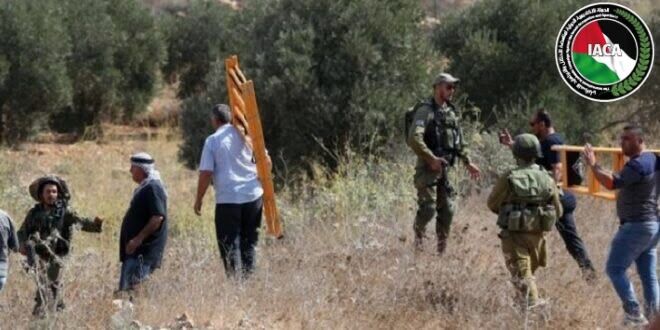
The International Academic Campaign Against Occupation and Apartheid issued a report highlighting a severe and systematic rise in attacks by Israeli settlers and occupation forces on Palestinian farmers during the 2026 olive harvest season. The report titled “Olive War 2026” stated that these violations are no longer random incidents but rather an organized pattern aimed at undermining Palestinian resilience and connection to their historic land.
Based on local and international data, the report documented 272 attacks from early September to mid-October resulting in one martyr and about 200 injuries of varying severity. The majority of attacks were carried out by settlers under direct protection of occupation forces, which also actively suppressed farmers and prevented them from accessing their fields.
The Wall and Settlement Resistance Commission recorded over 400 assaults on agricultural lands and equipment during the first three weeks of October, with Nablus governorate most affected, followed by Salfit and Ramallah, indicating a targeted focus on northern and central West Bank areas to fragment Palestinian agricultural holdings.
Medical sources reported that since the start of the season, four Palestinians have been martyred, with dozens more wounded by live and metal bullets. Concurrently, more than 3,200 olive trees were destroyed through cutting, burning, and vandalism, inflicting severe economic losses on farmers to discourage them from sustaining their lands.
The report analyzed the phenomenon showing coordination between settler field attacks and political and financial backing provided by the Israeli government to settlement outposts. It noted occupation forces provide security cover to settlers during looting of crops and equipment and militarily intervene to forcibly remove farmers from their properties.
Violations extended beyond farmers to target journalists, international activists, and diplomatic missions attempting to support Palestinians during the harvest, reflecting an intent to isolate Palestinian farmers and conceal these silent ethnic cleansing crimes in rural Palestine from international awareness.
Historical comparison revealed a sharp increase in attacks from 33 incidents in 2020 to hundreds in 2026, representing over a 47% rise from last year. The report emphasized that targeting the olive tree constitutes a war on Palestinian national identity, as it symbolizes steadfastness and serves as a primary livelihood source for thousands of families.
The study concluded with practical recommendations including forming popular protection committees in villages, organizing collective harvest campaigns, activating legal and diplomatic channels to hold perpetrators accountable internationally, and developing an “Olive Diplomacy” concept to transform the harvest season into an annual global demonstration supporting Palestinian existence and ending the occupation.