
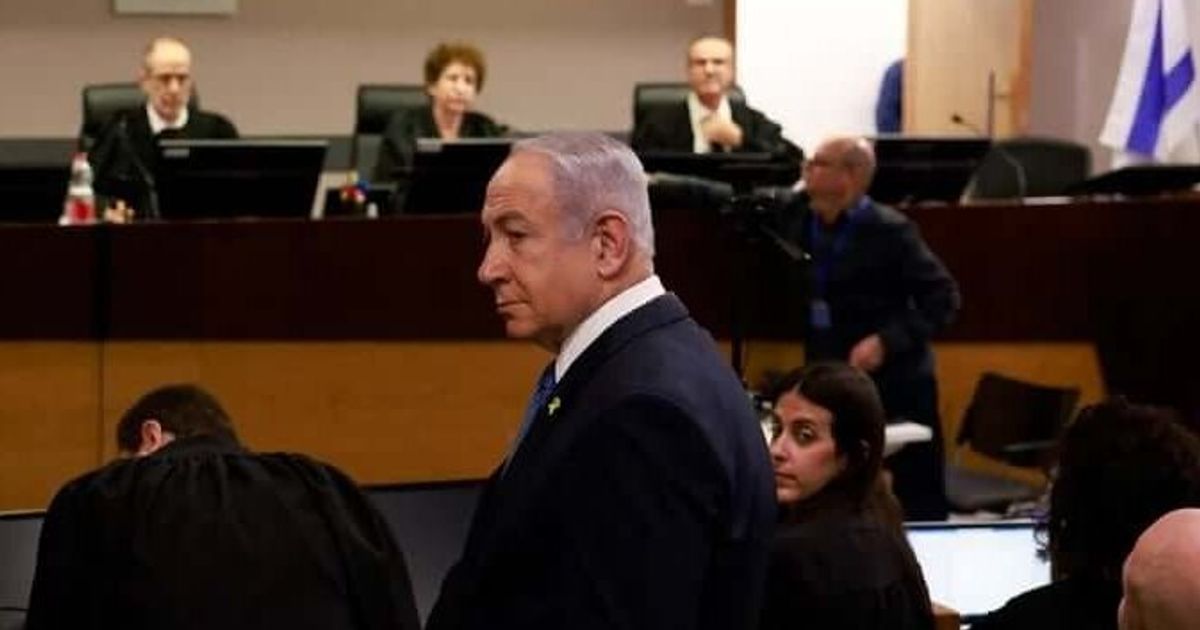
Palestine Media Agency – Pmedia – The occupation court in Jerusalem witnessed significant developments in ongoing corruption cases against Prime Minister Benjamin Netanyahu, with judges recommending the legal advisor reconsider the continuation of legal proceedings. This followed an extraordinary session calling for exploration of possible settlements in the cases known as files 1000, 2000, and 4000.
The cases began in early 2017 when Netanyahu was first questioned on suspicions of bribery and fraud. Investigations revealed his connections with businessmen and media figures. In August 2017, the prosecution signed a state witness agreement with Ari Harow, Netanyahu's former chief of staff, who provided pivotal recordings related to case 2000. The occupation police later recommended prosecuting Netanyahu on charges of bribery, fraud, and breach of trust, accusing him of receiving expensive gifts and attempting to control media coverage.
Investigations expanded to include case 4000, accusing Netanyahu of granting regulatory favors to a telecom company in exchange for controlling content on a widely accessed news site. In 2019, formal indictments were issued, and evidence presentation began in 2021 with extensive testimonies about Netanyahu's interventions in media affairs.
In 2022, defense negotiations for a plea bargain failed, and evidence difficulties emerged after a key witness retracted parts of his testimony. In 2025, Netanyahu requested a pardon citing internal divisions, and completed his personal testimony in 2026 after numerous intensive sessions.
Judges expressed doubts about proving bribery charges and emphasized ending the trial due to evidential complexities. They suggested dropping bribery accusations in cases 2000 and 4000, focusing instead on case 1000, which might be resolved through agreements. This trial is the longest and most complex in the history of occupation prime ministers, spanning nearly a decade with hundreds of witnesses and thousands of documents.
Political and legal circles now await the final decision from the legal advisor, who faces pressure to balance judicial integrity with evidentiary and legal challenges surrounding the case.