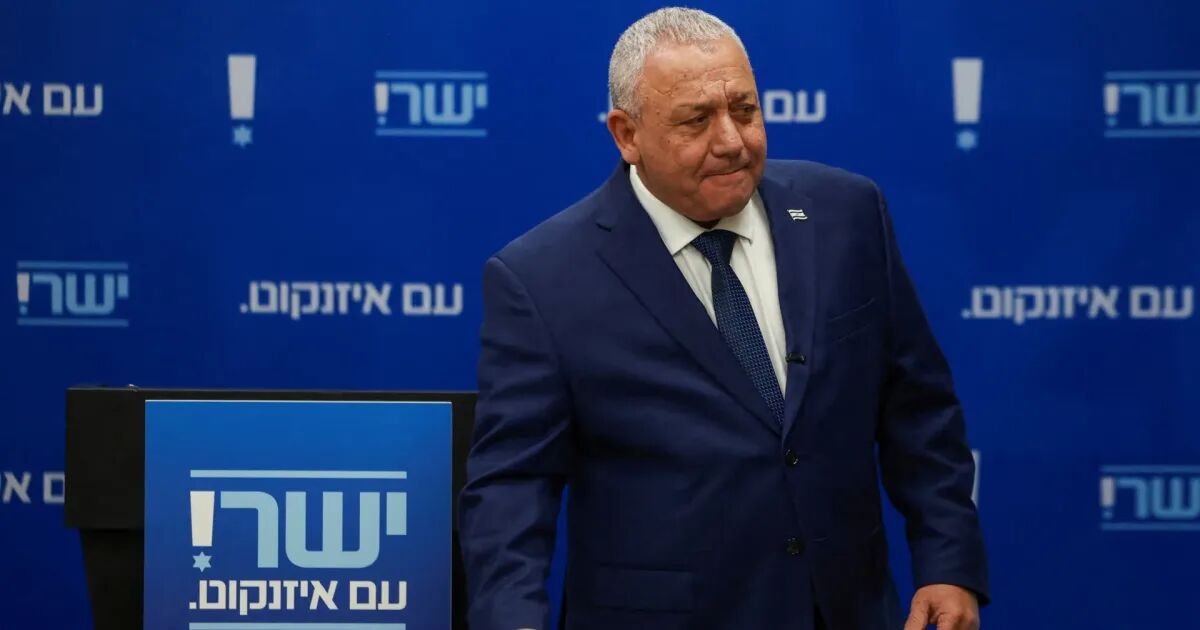
Palestine Media Agency – Pmedia – The "Yeshar" party, led by former Chief of Staff of the Israeli army, Gadi Eisenkot, has reached a preliminary coalition agreement with the Democratic party aiming to overcome obstacles in forming a new government capable of removing Prime Minister Benjamin Netanyahu from power. This agreement follows previous disputes that threatened Eisenkot's efforts after election results failed to give any side a decisive majority.
Under the new understanding, the Democratic party will receive four ministerial portfolios including Public Security, Labor and Social Affairs, Communications, and Culture and Sports, along with key parliamentary positions. The party had previously halted talks in protest against Eisenkot's maneuvers exploring a unity government with the right-wing Likud party.
Yair Golan, leader of the Democratic party, affirmed his bloc's commitment to electoral promises to replace Netanyahu and protect what he termed "democracy." He urged other parties opposing Likud to expedite the signing of final agreements to form the government and steer the entity toward a new political direction away from traditional right-wing control.
Eisenkot officially announced resolving disputes with his left-wing allies, emphasizing the need to unify ranks before the legal deadline on December 6 to form a government. The task faces significant complications as Eisenkot's bloc currently holds only 48 seats, while Netanyahu's camp, including far-right and religious allies, holds 53 seats. A governing coalition requires reaching 61 out of the 120 Knesset seats, making every parliamentary vote critical.
To bolster his chances, Eisenkot also announced a parallel agreement with Avigdor Lieberman, leader of the "Yisrael Beiteinu" party, to officially join the coalition. Lieberman, known for his historic hostility to ultra-Orthodox parties and his firm rejection of coalitions with Arab lists holding 19 seats, surprisingly hinted at possible acceptance of a government including the hardline "Yahadut HaTorah" party, provided it enjoys the support of a "Jewish majority." This move aims to block Netanyahu from returning to premiership by forming a minority government reliant on external support.
This approach might open the way to a government with 55 seats, relying on external support from the United Arab List holding 8 seats. However, this formula remains politically risky due to deep contradictions within the fragile coalition components, especially regarding religious and political issues.
The issue of drafting ultra-Orthodox remains the biggest hurdle to stability, with Eisenkot and Lieberman insisting on ending exemptions for yeshiva students from military service, strongly opposed by the hardline faction.
Political circles await the outcomes of last-minute negotiations with high anticipation, as this phase is crucial in determining Netanyahu's political future amid increasing pressures from opponents aiming to end his long tenure.
Sources indicate intense negotiations behind the scenes to reconcile conflicting demands between secular and religious parties within Eisenkot's camp. The former chief of staff seeks to provide sufficient guarantees to his partners to ensure the government's resilience against potential defections led by Likud.
Should Eisenkot fail within the deadline, the entity faces two bitter choices: returning to elections for the sixth time or giving Netanyahu another chance to form a narrow right-wing government— a scenario the current bloc aims to avoid by all means.