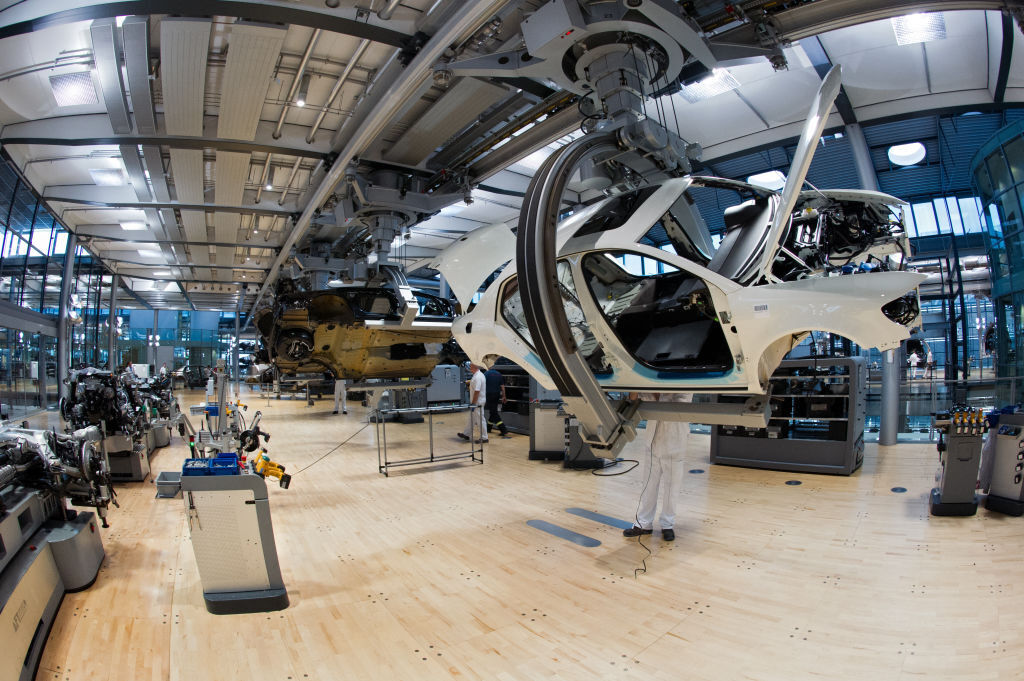
Palestine Media Agency – Pmedia – German Transport Minister Steffen Bilger has urged major automobile manufacturers to maintain their main operational centers and vital activities within Germany. This demand is part of a political trade-off aimed at securing Berlin’s support for easing the European Union’s ban on internal combustion engines.
Bilger emphasized the government’s clear expectation that Germany remains the primary hub for automotive development and production, calling this a foundational condition for economic stability.
He noted that recent political efforts have led to significant progress, including a rollback on a total ban of combustion engines in Europe. Consequently, automakers are expected to commit explicitly to investment and operations within their German headquarters.
Reports from Brussels indicate growing signals toward softer European climate regulations, potentially reducing the severity of the internal combustion engine ban scheduled for full implementation in coming years.
Current proposals under European negotiations would allow manufacturers to continue selling new vehicles equipped with combustion or hybrid engines beyond 2035 without incurring heavy financial penalties, pending a final decision in December.
The German auto industry is currently experiencing a severe crisis threatening thousands of jobs, with major companies considering tens of thousands of layoffs and possible closure of historic factories due to economic pressures and high production costs relative to global markets.
While acknowledging companies’ strategic moves to invest abroad as part of global growth, Bilger stressed the enduring core value of the “Made in Germany” brand and the necessity of preserving full production cycles domestically.
He called on the government to take serious steps to reduce financial and bureaucratic burdens, particularly labor and energy costs, which now hinder factories’ competitiveness.
Bilger also highlighted external challenges faced by Europe, especially unfair competition from Asian markets. He expressed concerns about Chinese trade and industrial practices posing existential threats to Europe’s traditional industry and underscored the need to balance environmental commitments with safeguarding national economic interests.
The industrial sector in Germany awaits the outcomes of the forthcoming December EU meetings on environmental policies, decisions that will directly impact automakers’ choices on whether to retain factories locally or advance foreign expansion and workforce reductions.
من فلسطين إلى العالم
Berlin Conditions EU’s Relaxation of Combustion Engine Restrictions on Automakers Staying in Germany