
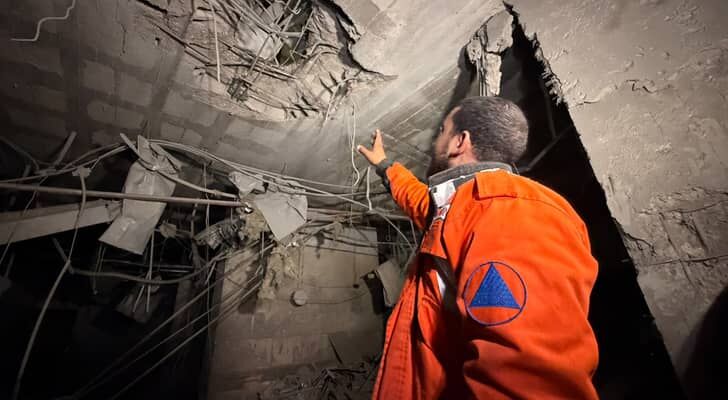
Foreign ministers from a group of Arab and Islamic countries, including Jordan, Saudi Arabia, Qatar, Egypt, and Turkey, have strongly condemned the aggression by the occupation army against the Nasser Medical Complex in Khan Younis. In a joint statement, the ministers emphasized that targeting medical facilities constitutes a blatant violation of international humanitarian law which mandates special protection for hospitals and healthcare personnel.
The airstrike on the medical complex resulted in the death of several patients and medical staff operating under harsh conditions. The statement highlighted that this crime is part of a series of systematic attacks targeting vital infrastructure in Gaza, exacerbating the suffering of besieged civilians.
The ministers deplored the ongoing assaults on Palestinian civilians across Gaza, notably the targeting of displaced persons' tents and sites sheltering families fleeing bombardment. These attacks directly undermine ceasefire efforts aimed at restoring security and stability, conflicting with international agreements.
They expressed grave concern over the stringent restrictions imposed by the occupation forces on humanitarian aid and shelter materials entering the Strip. The prevention of tents, mobile homes, and medical supplies threatens an unprecedented humanitarian catastrophe, especially as harsh winter approaches endangering thousands.
The statement warned that inadequate shelter and deteriorating water and sanitation services place children and infants at mortal risk due to extreme cold and insufficient care. The ministers called on the international community to pressure the occupation authorities to ensure unhindered humanitarian aid flow.
They urged the occupation to respond promptly to international appeals and the Peace Council to increase humanitarian aid volumes, stressing full compliance with obligations arising from the Sharm El Sheikh agreement and relevant UN Security Council resolutions, including Resolution 2803 of 2025, to ensure civilian protection.
The statement stressed the necessity for the occupation army to enforce a comprehensive ceasefire and protect medical facilities from future military targeting. It also demanded delivery of early recovery equipment to rehabilitate damaged critical infrastructure and enable UN agencies to carry out their humanitarian missions freely.
The ministers affirmed that commitments tied to the initial phase of signed agreements must be implemented immediately without further delay by the occupation, rejecting any new political or security conditions hindering relief access. Humanitarian needs should be addressed independently from other negotiation tracks.
They called on the United States and the Peace Council to intensify diplomatic pressure ensuring the occupation fulfills its obligations and lifts the siege on crossings. The credibility of international understandings depends on parties’ adherence to implementing agreed terms on the ground, preserving the lives of Palestinian civilians.
The ministers concluded affirming their countries’ resolve to continue cooperating with regional and international partners to consolidate the ceasefire in Gaza, reiterating their commitment to support the Palestinian people against aggression and escalate humanitarian aid to alleviate the suffering endured by Gaza’s residents under occupation.